

138 Cheque Bounce Advocate Chandigarh Section 138 NI Act Expert

Best Arbitration Lawyers in Chandigarh | Fast Dispute Resolution
April 30, 2026
Cheque Bounce Defence Advocate Chandigarh Section 138 Case
May 2, 2026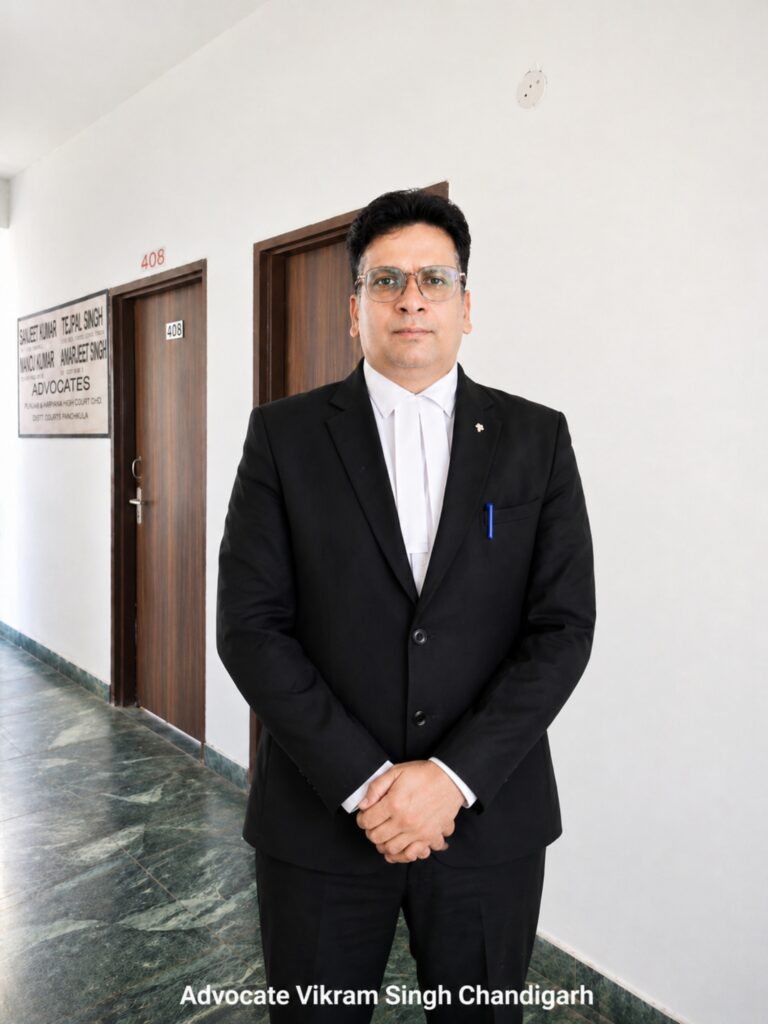

This guide is prepared by practising property and criminal law advocates in Chandigarh for general legal awareness only. It does not constitute formal legal advice. For your specific matter, please consult a qualified advocate.
Why You Need to Understand Section 138 Before Acting
Facing a cheque bounce case can be frightening. Many people who walk into our office believe conviction is automatic. That is simply not true.
Section 138 of the Negotiable Instruments Act, 1881 is one of the most technical areas of Indian criminal law. However, it is also one of the most defensible — when handled by the right advocate from the beginning. This guide explains the law clearly so you know exactly where you stand.
What Is Section 138 of the NI Act?
Section 138 makes cheque dishonour a criminal offence in India. However, not every bounced cheque automatically leads to a criminal case. Three specific conditions must all be met before the offence is complete.
A cheque bounce becomes a criminal offence only when:
- The cheque was issued to discharge a legally enforceable debt or liability
- The bank returned the cheque due to insufficient funds or a stop-payment instruction
- The payee sent a valid legal demand notice and the drawer failed to pay within 15 days
Therefore, if any one of these three conditions is missing, the case is not maintainable in court. This is why early legal consultation is so important.
How Does a Section 138 Case Proceed in Chandigarh?
The legal process for a cheque bounce case follows a strict sequence. In fact, missing any step in this sequence can defeat the complainant’s case entirely. Understanding each stage helps you respond correctly.
Cheque Returns from Bank
The bank issues a return memo stating the reason — usually “insufficient funds” or “payment stopped by drawer.” This memo is the legal starting point. The date on this memo triggers all subsequent deadlines.
Legal Demand Notice Must Be Sent Within 30 Days
The payee must send a written demand notice within 30 days of receiving the return memo. The notice must demand payment and give the drawer 15 days to pay. Without a valid notice, the entire case fails. This is the most common procedural defect we find on behalf of our clients.
Complaint Filed in Court Within 30 Days
If the drawer does not pay within the 15-day window, the payee must file a complaint in the Magistrate’s court within another 30 days. In Chandigarh, complaints are filed at the District Courts, Sector 17. Filing even one day late makes the case time-barred.
Summons Issued to the Accused
The court issues summons to the accused after the complaint is admitted. Do not ignore summons. Even if you dispute the claim entirely, you must appear through an advocate. Ignoring summons leads to a non-bailable warrant.
Trial, Evidence, and Judgement
The case proceeds to trial. Both sides present evidence and witnesses. Cross-examination is a critical stage. After that, the court delivers its judgement — or the parties settle the matter. Under Section 147 of the NI Act, cheque bounce cases can be compounded at any stage, including after conviction.
Once you receive a demand notice under Section 138, you have only 15 days to pay the cheque amount or dispute the claim through a lawyer. Do not let this window expire without taking legal advice.
What Are the Penalties Under Section 138?
Section 138 is a criminal offence, not a civil dispute. Therefore, the consequences go beyond simply repaying the cheque amount. The court can impose the following punishments.
| Punishment | Maximum Limit | Notes |
|---|---|---|
| Imprisonment | Up to 2 years | Can run concurrently with fine |
| Fine | Up to twice the cheque amount | Plus the cheque amount as compensation |
| Both | Imprisonment and fine | Court has discretion on quantum |
| Compensation | As determined by court | Awarded under Section 357 CrPC |
However, the severity of the punishment depends heavily on the facts of the case. First-time offenders who settle promptly often receive lighter sentences. In addition, a skilled defence advocate can negotiate a compound — which closes the case entirely without a conviction record.
Your Rights as the Accused
Being named as an accused under Section 138 does not mean you are guilty. Indian law provides strong protections for the accused. In fact, the Supreme Court has repeatedly held that Section 138 should not be used to harass people over disputed commercial transactions.
- Right to legal representation at all stages of the proceedings
- Right to bail as a matter of right — Section 138 is a bailable offence
- Right to cross-examine the complainant and all witnesses
- Right to challenge the presumption — the Section 139 presumption is rebuttable
- Right to compound the case — settle at any stage under Section 147
- Right to anticipatory bail if arrest is feared before appearance in court
Furthermore, if the legal notice or complaint had any procedural defect, your advocate can apply for dismissal before the trial even begins.
How Long Does a Section 138 Case Take in Chandigarh?
A cheque bounce case typically takes one to three years in Chandigarh courts. However, this depends on several factors — the complexity of the dispute, court workload, and whether the parties attempt settlement.
In many cases, early legal intervention dramatically speeds up resolution. Vikram Singh & Associates regularly secures outcomes within months — either through a negotiated settlement or a technical dismissal based on procedural defects.
Why You Need an Experienced Section 138 Advocate in Chandigarh
Cheque bounce trials are more technical than most people realise. Notice timelines, jurisdiction rules, and evidence standards all create opportunities for the defence. For this reason, the advocate you choose matters enormously.
Vikram Singh & Associates has handled hundreds of Section 138 cases at Chandigarh District Court, Panchkula District Court, and Punjab & Haryana High Court. Specifically, our team focuses on:
- Identifying notice and complaint defects that can dismiss the case at the outset
- Challenging the existence of the underlying debt or liability
- Preparing targeted cross-examination of the complainant
- Securing anticipatory bail to protect clients from arrest
- Negotiating fair out-of-court settlements that protect the client’s interests
- Filing revision petitions and appeals at the High Court when required
Facing a Section 138 Cheque Bounce Case in Chandigarh?
Call Vikram Singh & Associates for a free first consultation. We will assess your case, identify your strongest defences, and advise you on the best path forward.
Frequently Asked Questions
What is the punishment for cheque bounce under Section 138?
The accused can face imprisonment of up to 2 years, a fine of up to twice the cheque amount, or both. The court may also award compensation to the complainant under Section 357 CrPC.
Can a cheque bounce case be settled out of court in Chandigarh?
Yes. Under Section 147 of the NI Act, cheque bounce cases are compoundable at any stage — even after conviction. Both parties can agree to settle and have the case closed. An experienced cheque bounce lawyer in Chandigarh can facilitate this process and negotiate fair terms.
How long does a Section 138 case take in Chandigarh courts?
Typically one to three years, depending on complexity and court workload. Early legal representation and a clear strategy — whether settlement or technical defence — can significantly reduce this timeline.
Is it compulsory to send a legal notice in a cheque bounce case?
Yes. Sending a legal demand notice within 30 days of the cheque return memo is mandatory under Section 138(b). Without a valid notice, the entire case is not maintainable. This is one of the first things we check in every new case.
Can I get anticipatory bail in a Section 138 case?
Yes. Although Section 138 is a bailable offence, clients sometimes fear hostile complainants or aggressive police action. Anticipatory bail under Section 438 CrPC provides legal protection before any arrest. Our firm has secured anticipatory bail in multiple Section 138 cases at both Chandigarh District Court and Punjab & Haryana High Court.
Conclusion
A Section 138 cheque bounce case is serious — but it is also winnable with the right legal strategy. To summarise: act quickly, engage a qualified advocate, and understand that every stage of the process — from the demand notice to the final judgement — presents opportunities for your defence.
At Vikram Singh & Associates, we believe in giving clear, honest advice. We never encourage unnecessary litigation. However, when a case must be fought, we fight it with everything we have — at Chandigarh District Court, Panchkula District Court, Punjab & Haryana High Court, and the Supreme Court of India.
7 Proven Defence Strategies to Win a Section 138 Case in Chandigarh — the practical follow-up to this guide, written by Advocate Vikram Singh from 15 years of courtroom experience.
